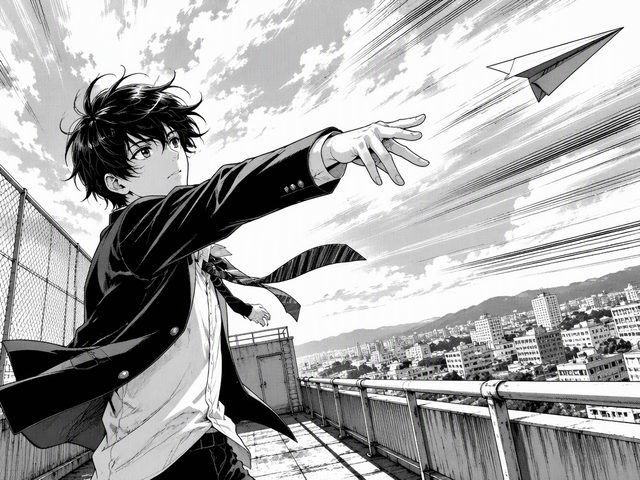
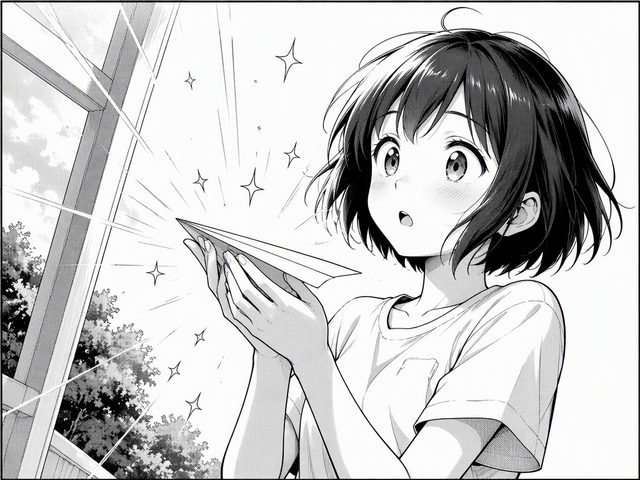
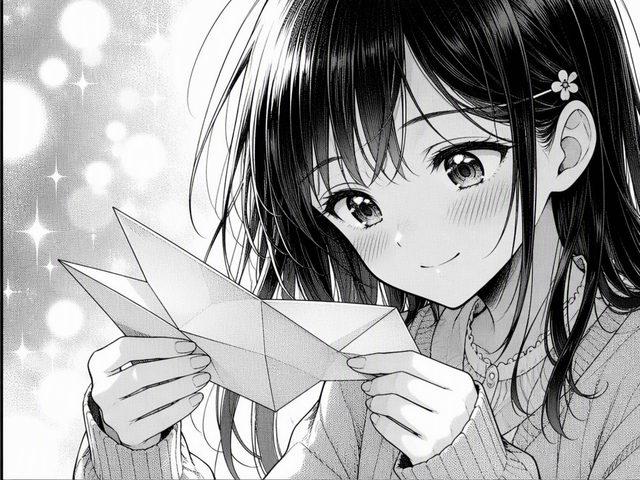
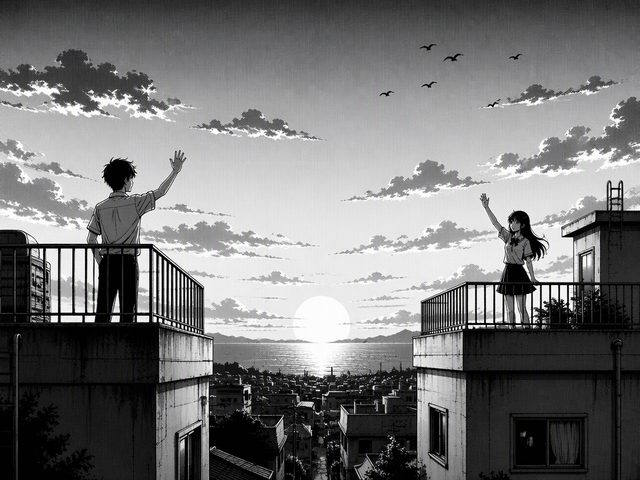
Anime is not one thing you either like or do not. It is a medium with doors at every height. Here is the starter kit: six doors to walk through, the factory tour (how anime gets made), two games to play, a test of your taste, and the habit of watching like a critic. Hands on, no homework.
The six doors
Every appetite for anime opens a different door. Tap a card to flip it, tap again to walk through.
The factory tour: how anime gets made
Nobody sits down and "draws an anime". An episode moves through six stations, often across several studios and countries, on a schedule that eats people. Learn the pipeline once and you will watch everything differently.
1 · PlanA committee green-lights the project; the series composer maps the story across episodes.
2 · Script + boardsScripts lock, then the storyboard turns each episode into drawn shots with timing and camera notes.
3 · Layout + keysLayouts set each shot's staging; key animators draw the poses and timing that carry the motion.
4 · In-betweensIn-betweeners fill the frames between the keys. This is where schedules live or die.
5 · Paint + photoDigital paint colors every frame; compositing ("photography") stacks layers, light, and effects.
6 · Sound + shipVoices, score, and effects land in the final mix. The episode airs. The next one is already late.
YOUR TURN: TWO OF THESE ARE MYTHS, TWO ARE TRUE. JUDGE EACH ONE.
The habit: watch like a critic
You do not need film school to watch well. Four questions, asked after any episode, will sharpen your taste faster than a hundred reviews.
Check 01
Who made it?
Studio, director, source material. The same studio at its best and worst are different planets, and a great director elevates average material. Credit scenes are spoilers for quality.
Check 02
Where did the money go?
Animation budgets are finite. Notice which cuts got the beautiful frames and which got held stills. Where a show spends is what a show believes in.
Check 03
What did the music do?
Mute the score in your head and watch a big scene again. If the feeling vanishes, the music was carrying it. Great shows let silence work as hard as sound.
Check 04
Does it outgrow its tropes?
Beach episodes, power-ups, mysterious transfer students: tropes are tools, not sins. The question is never "is this a cliche" but "did this earn it".
The game: the sakuga timing lab
Animation is drawings shown in sequence, and drawings cost money. You are the episode director now: pick a frame rate and watch what it does to one flying punch. Then decide where the expensive frames go.
12 drawings/sec · TV standard
Every drawing between the start and the landing is a hand-drawn frame. More frames, smoother motion, higher cost. Pick a rate and press play.
DIRECTOR'S CALL: A 24-MINUTE EPISODE HAS HUNDREDS OF CUTS. WHERE DOES THE SAKUGA BUDGET GO?
Fig. 1 · Sakuga. The moments where the drawing count spikes are the moments you remember.
The game: read a manga page the right way round
Most anime begins as manga, and manga reads right to left. Six panels, one correct order. Click through the page like a Japanese reader would, and feel your Western habits fight you.
A sample page: "The Paper Plane" · six panels, one story
READING ORDER:
1st2nd3rd4th5th6th
IN PROGRESS
A manga page is a machine with a direction. This one has six panels. Click them in the order a Japanese reader's eyes would move. Hint: not the order yours want to move.
Fig. 2 · Right to left, top to bottom. One skill, and four thousand manga volumes open up to you.
The test: the vibe check
Four questions, no wrong answers. We tally your instincts and point you at the door you will most enjoy opening first.
Fig. 3 · The vibe check. Taste is data too.
TYPES
SEC.02
The 12 types
Anime sorts itself twelve ways. Five describe who the story was made for, seven describe what the story does. Each card opens the full tour: the flavor, the key ingredients, the iconic titles, and where to start.
The matchmaker: which of the twelve is yours?
Five quick picks. Every answer feeds the full dozen · all twelve types are possible outcomes, and your result opens the type card itself.
Fig. 4 · The matchmaker. Twelve doors, one first knock.
BIG 4
SEC.03
The Big 4
One Piece, Naruto, Bleach, Dragon Ball: the four shonen that carried anime around the planet. They are called "big" because nothing else is this long, this loved, or this deeply woven into the medium. Four flags, four flavors. Pick one and commit · the calculator below shows exactly what you are signing up for.
THE TEMPLATE
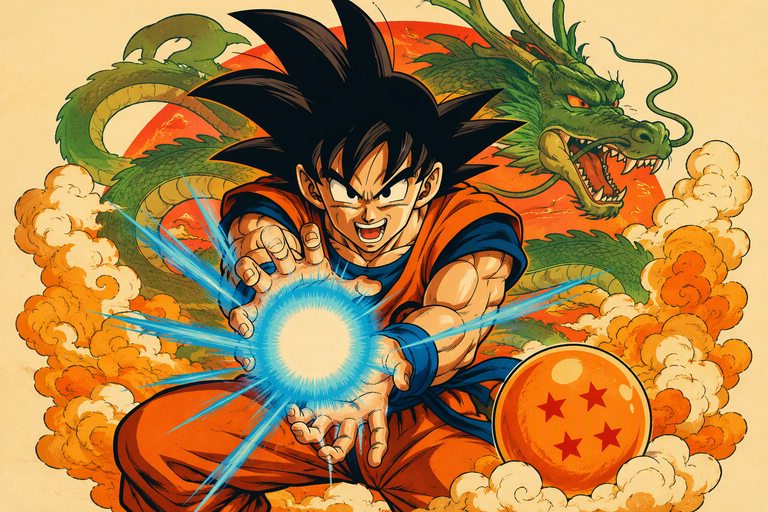
Dragon Ball
the one that wrote the rules
Manga1984-1995 · 519 ch
Anime1986 on · 600+ eps
CreatorAkira Toriyama
Goku loves two things: dinner and a stronger opponent. Every training arc, transformation, and screaming power-up since descends from this show. It is not the deepest of the four. It is the alphabet the other three are written in.
THE MARATHON
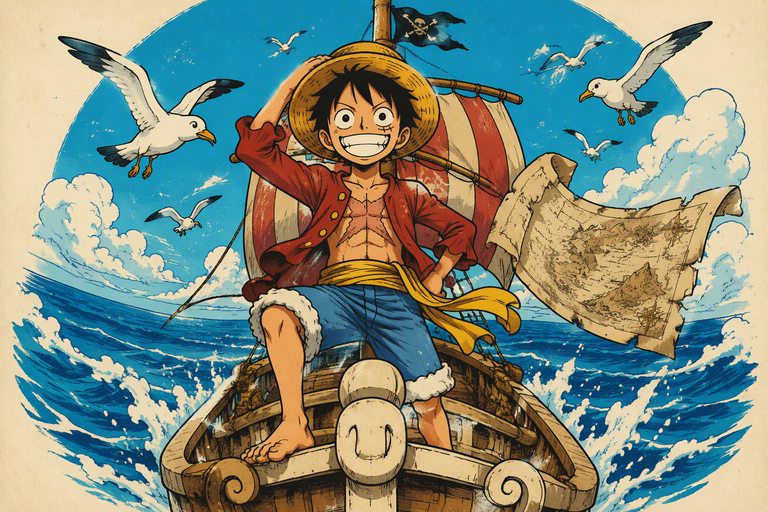
One Piece
the one that never stops delivering
Manga1997 on · 1100+ ch
Anime1999 on · 1100+ eps
CreatorEiichiro Oda
A rubber boy wants to be Pirate King, and twenty-five years later the promise still pays off. The best-selling manga in history plants payoffs fifteen years early. Start it and you will understand the word nakama in your bones.
THE HEART
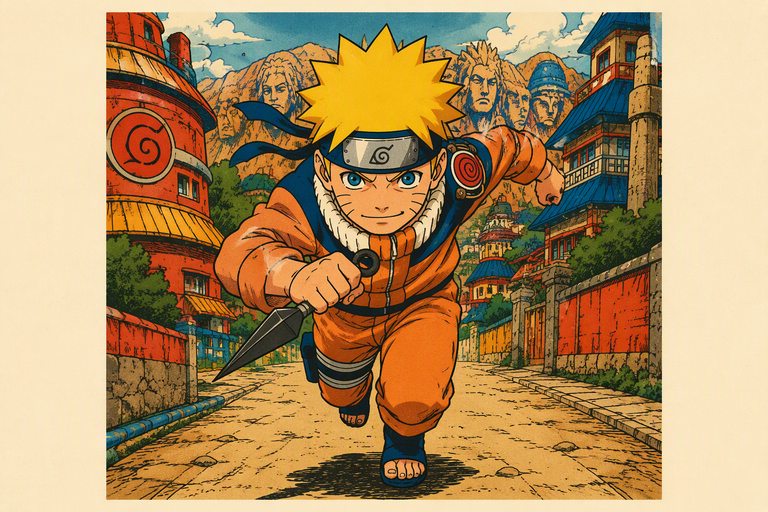
Naruto
the one that raised a generation
Manga1999-2014 · 700 ch
Anime2002-2017 · 720 eps
CreatorMasashi Kishimoto
An orphaned, shunned kid grins until his village has to love him back. Under the ninja action it is a story about loneliness and recognition, and for millions of viewers worldwide it was the first anime that mattered personally.
THE STYLE
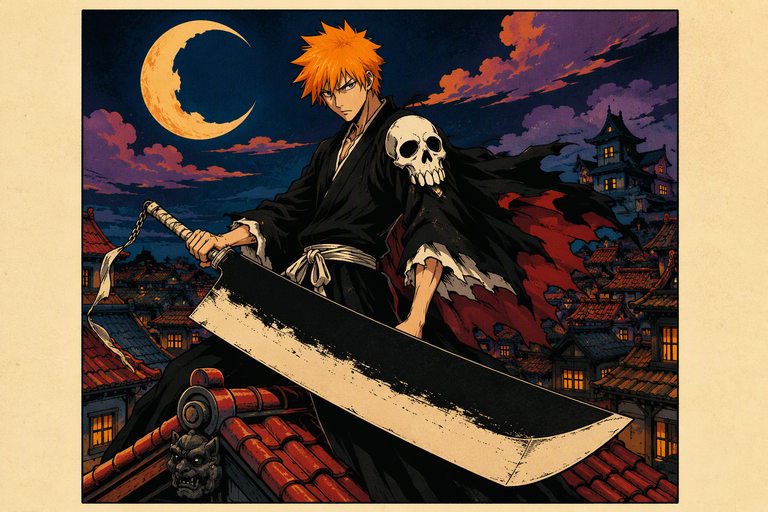
Bleach
the one with the wardrobe
Manga2001-2016 · 686 ch
Anime2004-2012, 2022 on
CreatorTite Kubo
A teenager inherits the job of guiding the dead, and every fight arrives dressed like a fashion editorial. Kubo's negative space and silhouettes made Bleach the coolest-looking of the four, and its 2022 revival came back gorgeous.
THE COMMITMENT CALCULATOR
Every episode runs about 24 minutes. Pick a show, set your pace, see your future.
GHIBLI
SEC.04
Studio Ghibli
One studio became a genre of its own. Founded in 1985 by Hayao Miyazaki, Isao Takahata, and Toshio Suzuki, Ghibli makes hand-drawn films where the quiet minutes matter as much as the plot. Twelve essential films below. Not sure where to start? Tell the mood matcher how you want to feel.
1986DEBUT FEATURE
Castle in the Sky
Hayao Miyazaki
A girl falls out of the sky wearing a glowing stone, and every airship in the world wants it. Pure adventure, Ghibli's first official film.
1988DOUBLE BILL
Grave of the Fireflies
Isao Takahata
Two siblings try to survive the last months of the war. The most devastating animated film ever made. Once is enough; once is required.
1988THE MASCOT
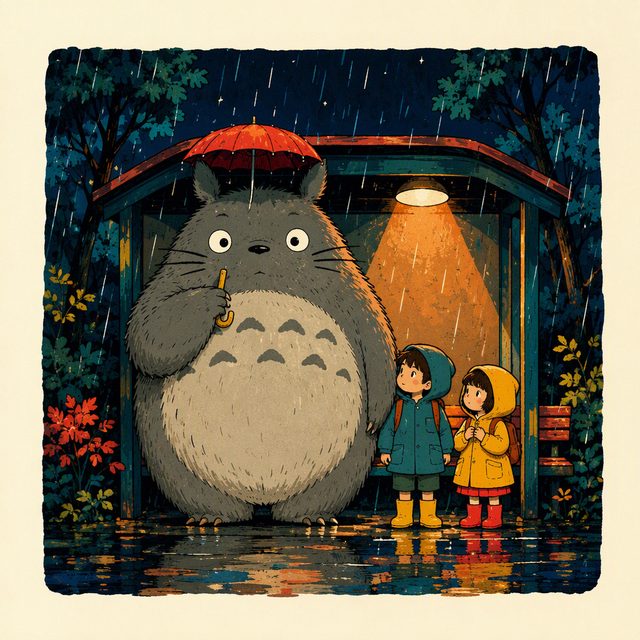
My Neighbor Totoro
Hayao Miyazaki
Two sisters move to the country and befriend the forest. No villain, no crisis engine · just attention, and it outlasted everything louder.
1989COMING OF AGE
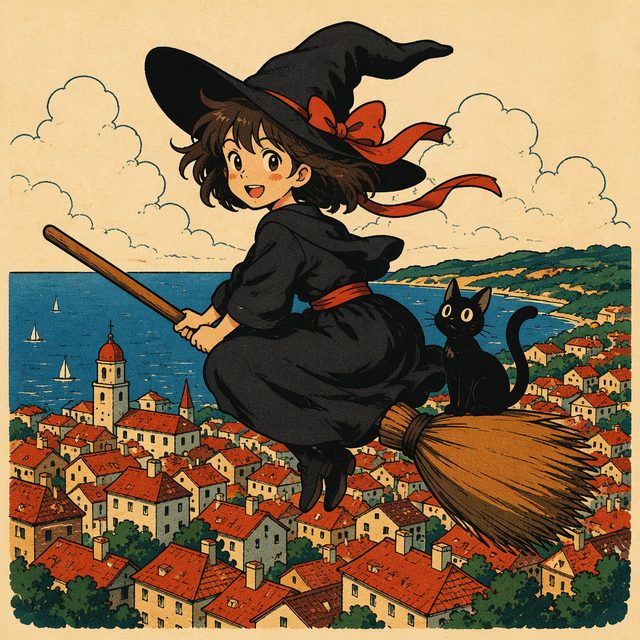
Kiki's Delivery Service
Hayao Miyazaki
A thirteen-year-old witch starts a courier business and loses her magic when she loses her joy. The kindest film about burnout ever made.
1991TAKAHATA'S MEMORY
Only Yesterday
Isao Takahata
A 27-year-old office worker takes a farm holiday and her ten-year-old self comes along. A film about remembering, for adults.
1992THE PILOT
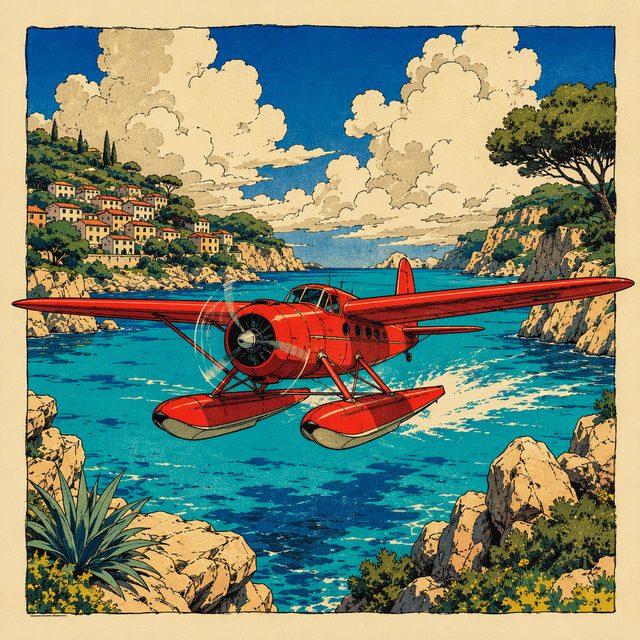
Porco Rosso
Hayao Miyazaki
A freelance pilot cursed into a pig fights air pirates over the Adriatic between the wars. The coolest film Ghibli ever made.
1997THE EPIC
Princess Mononoke
Hayao Miyazaki
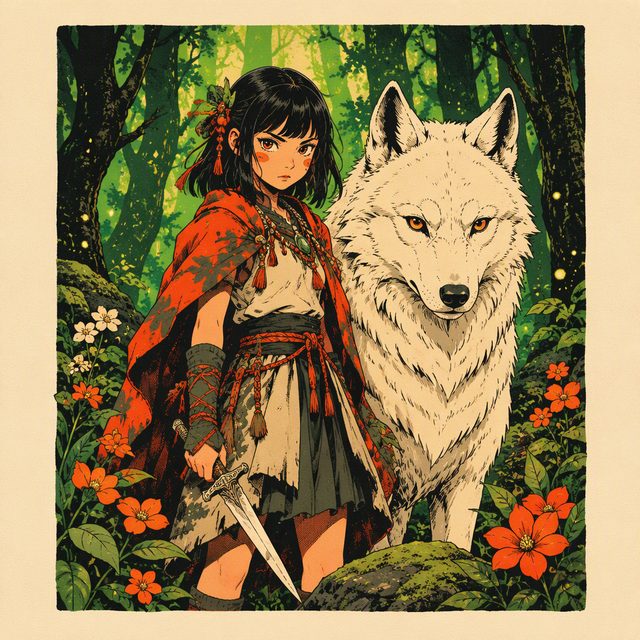
Forest gods versus an iron town, with sympathy for both. See with eyes unclouded, the film asks, and it means you.
2001THE OSCAR
Spirited Away
Hayao Miyazaki
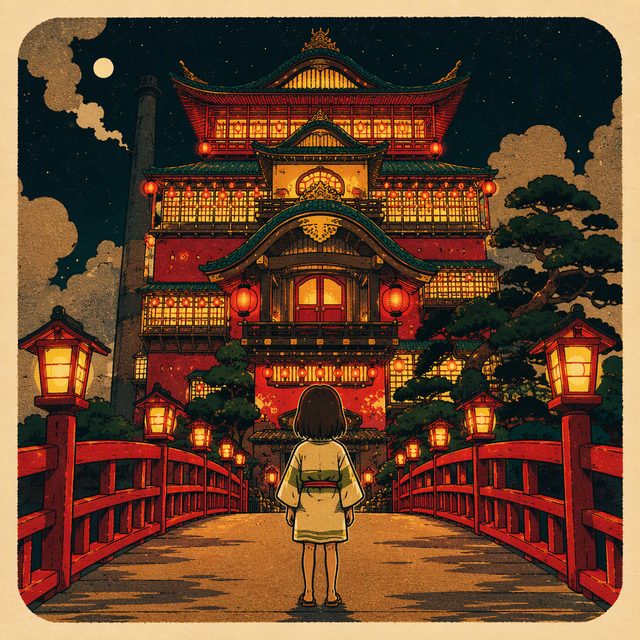
A girl works in a bathhouse for gods to win her parents back. The highest-grossing film in Japanese history for two decades, and the usual answer to "where do I start".
2004THE ROMANCE
Howl's Moving Castle
Hayao Miyazaki
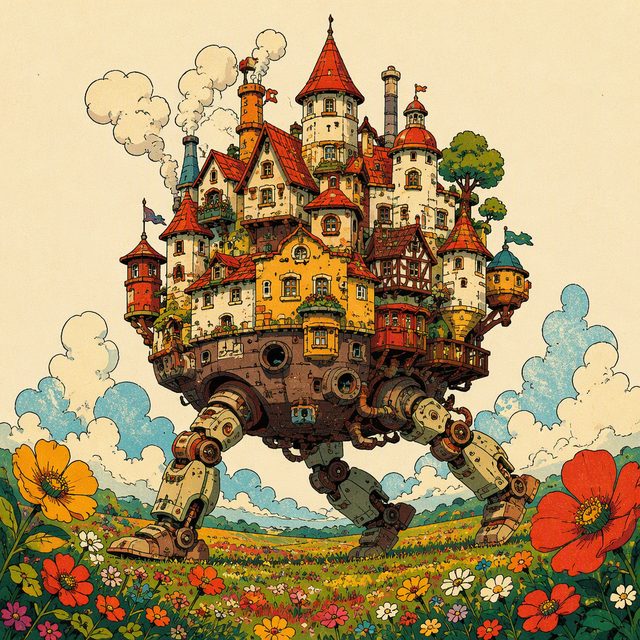
A hat-shop girl cursed into old age moves in with a vain wizard and his walking castle. War outside, love inside, magic everywhere.
2008THE TIDE
Ponyo
Hayao Miyazaki
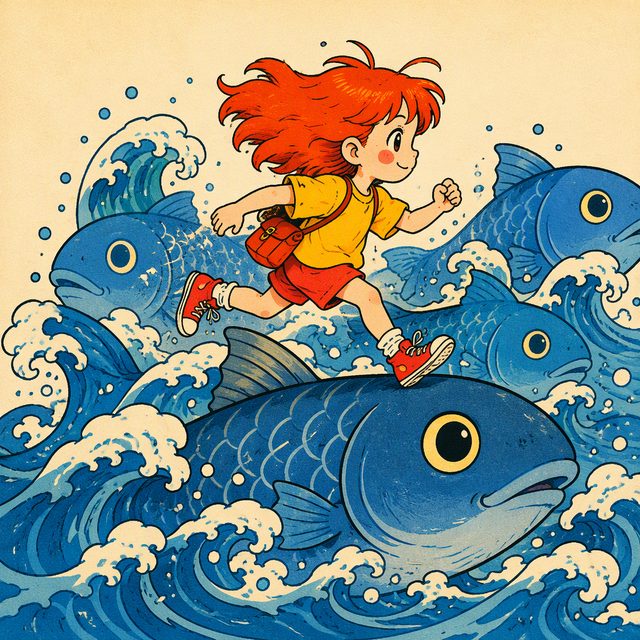
A goldfish wants to be a girl and the ocean rises to allow it. Hand-drawn waves by the hundred thousand; a bedtime story with teeth.
2013THE FAREWELL
The Wind Rises
Hayao Miyazaki
The engineer who designed the Zero fighter dreams of beautiful airplanes inside an ugly decade. Miyazaki's most personal, most argued-about film.
2023THE RETURN
The Boy and the Heron
Hayao Miyazaki
A grieving boy follows a heron into a collapsing dream-world. Miyazaki un-retired to make it; it won the Oscar. The latest word, maybe the last.
Pick a mood above and the right films will light up.
MAKERS
SEC.05
The 20 creators
Twenty hands across ninety years, from the man who invented manga to the ones redrawing the medium right now. Each was answering the ones before. Eleven built the page, nine built the screen, and every row below opens their full summary.
All twenty, in order
From Osamu Tezuka's postwar pages to the provocateurs of the 2010s. Page lane left, screen lane right. Tap any row for the full summary.
MEDALLION RINGSThe PioneersThe BoomThe RebelsThe Global Era
The credits: who actually makes it
The twenty names above get the glory, but anime and manga are team sports. Here is every seat on the bus.
The manga desk
One chapter needs
The mangaka · story and art, the name on the cover. The assistants · backgrounds, screentone, speed lines; most pros started here. The editor · half coach, half co-author; in Japan the editor reads every chapter before the world does. The magazine · weekly serials rank every chapter by reader survey, and the bottom ranks get cancelled. That pressure cooker is why manga moves so fast.
The anime studio
One episode needs
The director · the vision. The series composer · the head writer who maps the story across episodes. The character designer · the cast's look. The animation director · keeps every face on-model. Key animators · draw the poses that carry the motion. In-betweeners · fill the frames between them. The art director · every background. The composer · the sound. The producer · the money and the deadline.
Names worth knowing
Beyond the twenty
Yutaka Nakamura · the star animator behind the fight scenes you see clipped everywhere. Gen Urobuchi · writer, architect of dark prestige anime (Madoka Magica, Psycho-Pass). Mari Okada · writer, the feelings specialist (Anohana, Maquia). Yoshiyuki Sadamoto · character designer, the faces of Evangelion. Glory goes to directors; the frames belong to these hands.
QUOTED
SEC.06
Famous lines
Twelve lines that escaped their shows and entered the language. Tap a card and it unfolds: who said it, in what, and why it stuck, in plain words.
RELAY
SEC.07
The map: who influenced whom
Anime is one long relay race. The page lane on the left (mangaka), the screen lane on the right (directors), birth years down the middle spine. Reading the arrows is simple: each one starts at a dot on the teacher's card and the arrowhead lands on the card of the creator they influenced. Solid lines stay inside one lane; a dashed line crosses to the other side. Tap any card to open their summary.
ERA KEYThe PioneersThe BoomThe RebelsThe Global Era
Map size100%
Fig. 5 · The relay. Twenty creators, ten direct links, fifty-eight years. Use the Map size buttons above to zoom out and see the whole relay at once · tap any card.
WATCH
SEC.08
The watch list
Thirty-four titles that built the medium · twenty-eight for the screen, six for the page. Open the featured one and turn real pages: the famous line, why it matters, the key beats, and the types it belongs to. Then pick any title from the shelf to load it into your hands.
COVER
Fig. 5 · Eight pages per entry: cover, title page, two famous lines, why it matters, its types, the key beats, and how to watch it.
Pick your next watch
The manga corner: read these on paper
Some masterpieces never got the adaptation they deserved, or the page version is simply definitive. Six major manga · the anime shelf's ink-and-paper cousins. Tap any card to open it in the flipbook above.
Manga 1
Berserk
KENTARO MIURA · 1989-
The darkest epic in the medium, drawn at a detail level that still humiliates everything around it. No adaptation has ever matched the page.
Manga 2
Vagabond
TAKEHIKO INOUE · 1998-
Musashi's legend as ink painting. Fight scenes that read like calligraphy, silence used like a weapon. Never fully animated · on purpose, arguably.
Manga 3
Monster
NAOKI URASAWA · 1994-2001
A surgeon hunts the killer he saved. The greatest thriller manga ever drawn; the anime is faithful, but the page pacing is surgical.
Manga 4
20th Century Boys
NAOKI URASAWA · 1999-2006
Childhood games become a cult's blueprint for the end of the world. Urasawa again, because nobody plots like him.
Manga 5
Slam Dunk
TAKEHIKO INOUE · 1990-1996
The basketball manga that made a nation pick up the sport. The final game is forty pages without a word of dialogue.
Manga 6
JoJo's Bizarre Adventure
HIROHIKO ARAKI · 1987-
One family, a century of style, poses that rewired fashion. The anime is glorious; the manga is where the poses were born.
SOUND
SEC.09
The sound: six composers
The twenty creators above draw the pictures; these six write what you hear. Half of what you feel in anime is music, and you already know some of these melodies by heart. Each card links to a listenable sample of the score.
Joe Hisaishi
Studio Ghibli
The sound of wonder itself: every Miyazaki film from Nausicaa onward. Piano melodies so simple a child can hum them, arranged so deep they carry films.
Sample · “One Summer's Day” from Spirited Away Listen ↗
Yoko Kanno
Cowboy Bebop · Ghost in the Shell: SAC
Jazz, blues, gospel, electronica · whatever the scene needs, in any language. Bebop's score is why people who have never seen anime still know the show.
Strings, chants, and longing. Demon Slayer's most devastating scene lands because her melody is underneath it.
Sample · “Kamado Tanjiro no Uta” from Demon Slayer Listen ↗
THE SONGS EVERYONE KNOWS · TAP TO HEAR A SAMPLE
A Cruel Angel's Thesis · Evangelion's opening, karaoke's national anthem · listen
Gurenge · LiSA's Demon Slayer opening, the song of the 2020 boom · listen
Unravel · Tokyo Ghoul's heartbreak anthem · listen
Blue Bird · Naruto Shippuden's sky-splitting opener · listen
Guren no Yumiya · Attack on Titan's first opening, the alarm bell · listen
We Are! · One Piece's first opening, sung by fans for 25 years · listen
WORDS
SEC.10
The glossary
Forty-two words that come up again and again in anime talk. Each card starts small: tap it and it opens with the one-line gist and the full explanation. Search or filter by family.