Twelve frontiers, three families · tap a row to unfold it, then open the full card.
The matchmaker: which of the twelve is yours?
Five quick picks. Every answer feeds the full dozen · all twelve frontiers are possible outcomes, and your result opens the frontier card itself.
Fig. 1 · The matchmaker. Twelve frontiers, one first knock.
START
SEC.02
The playground
Learn by playing: six doors, one factory tour, three games, zero homework.
The six doors
Every appetite for this subject opens a different door. Tap a card to flip it, tap again to walk through.
The factory tour: how an AI actually gets made
Nobody "builds an AI" in one move. A model moves through six stations, across thousands of people, giant buildings full of chips, and more human judgment than the marketing admits. Learn the pipeline once and every AI headline reads differently.
1 · DataText, images, code, and clicks are gathered by the library-full, then cleaned and filtered. The pile decides what the model can know.
2 · ModelResearchers pick an architecture: the shape of the neural network, how many layers, how many dials (billions, these days).
3 · TrainFor weeks, warehouses of GPUs adjust the dials until the model's guesses stop being wrong. This is where the power bill lives.
4 · TuneHuman reviewers rate answers, teach manners, and patch behavior. Fine-tuning turns raw prediction into a helpful colleague.
5 · Test + shipRed teams attack it, safety teams grade it, and then it ships to your screen, usually as a friendly chat box.
6 · Watch + learnFeedback flows back: what people ask, where it fails. The next version is already in training.
YOUR TURN: TWO OF THESE ARE MYTHS, TWO ARE TRUE. JUDGE EACH ONE.
The habit: read AI news like a skeptic
You do not need a computer science degree to read the tech news well. Four questions, asked about any headline, will sharpen your judgment faster than a hundred hot takes.
Check 01
Who is telling me this?
A lab announcing its own model, a company selling shovels, a regulator, a researcher with no stake. Everyone in this field has a position. Knowing the speaker is half the story.
Check 02
Demo or product?
A polished demo shows the best case once. A product survives the average case a million times. Ask which one you are looking at before you update your worldview.
Check 03
What does it cost?
Every miracle has a meter running: electricity, water, chips, data, and human reviewers. The price tag is usually the least hyped and most honest part of the story.
Check 04
What would change my mind?
Amara's law cuts both ways: hype overshoots in a year, undershoots in a decade. Decide in advance what evidence would move you, and notice when it arrives.
The four questions: what analytics actually is
Behind the jargon, every data tool on Earth answers one of four questions. Learn the four and most tech talk decodes itself.
Question 01
What happened?
Descriptive analytics. Reports the past, plain and simple: counts, totals, dashboards. "Sales fell 12% last month." Most of business runs on this.
Question 02
Why did it happen?
Diagnostic analytics. Digs for the cause: drill-downs, comparisons, correlations. "Sales fell in the two regions where a rival launched."
Question 03
What happens next?
Predictive analytics. Learns patterns from the past to forecast the future: demand, churn, spam, weather. This is where machine learning lives.
Question 04
What should we do?
Prescriptive analytics. Goes one step further and recommends the move: cut prices 5% here, reroute the trucks there. The forecast plus a decision engine.
The game: beat the forecast
Twelve months are in, month thirteen is blank. Tap the chart where you think it lands, then let the model draw its line and make its own guess. Closest to the truth takes the round · three rounds, you against the machine.
Round 1 of 3 · tap the chart to place your guess
Blue is you · red is the model · the gold star is the truth.
Fig. 2 · The whole game is predictive analytics in miniature: learn from what happened, guess what is next.
The game: human or machine?
Six short texts. Some were written by people, some by an AI. Guess which is which, then read the tell. Spoiler: it is harder than it was in 2022, and that is the point.
Fig. 3 · The Turing test went from party trick to daily life without anyone noticing.
The test: the vibe check
Four questions, no wrong answers. We tally your instincts and point you at the corner of this subject you will most enjoy first.
Fig. 4 · The vibe check. Curiosity is data too.
1815-NOW
SEC.03
The story so far
Twenty creators, four eras, one relay race. Tap any stop.
ERA KEYThe VisionariesThe FoundersThe Long GameThe Deep Learning Wave
Fig. 5 · The spine. Twenty stops, four eras, a hundred and seventy years · nobody on it started from zero.
MAKERS
SEC.04
The 20 creators
Twenty creators, twenty quotes, two centuries · tap any card for the full story.
The wall of quotes
From Ada Lovelace's 1843 notes to the lab founders of today. The corner tag marks the lane: theory or practice. Tap any card for the full summary.
ERA COLORSThe VisionariesThe FoundersThe Long GameThe Deep Learning Wave
The credits: who actually builds it
The twenty names above get the glory, but AI is a team sport played by hundreds of thousands. Here is every seat on the bus.
The research floor
One model needs
The researchers · the ideas: architectures, training recipes, the papers. The engineers · turn ideas into code that survives contact with ten thousand GPUs. The data engineers · gather and clean the libraries of examples. The labelers and raters · the hidden teachers, paid by the task, who grade answers so the model can learn manners. The safety teams · red-teamers and interpretability researchers paid to find the failure modes first.
The machine room
One data center needs
The chip designers · the people drawing billions of transistors. The fabs · TSMC and a few rivals, the only buildings on Earth that can print the leading edge. The systems engineers · keep oceans of chips cool, fed, and talking. The power planners · the newest role: finding gigawatts for the next training run. Nobody in this room appears in the launch video, and nothing ships without them.
Names worth knowing
Beyond the twenty
Andrej Karpathy · builder and teacher; his zero-to-hero lectures are how a generation actually learned this. Ilya Sutskever · the scientist behind the scaling bet, from AlexNet to GPT. Timnit Gebru · the ethicist who made the field answer for its data. Kate Crawford · the researcher mapping AI's hidden costs in labor and earth. Glory goes to founders; the field belongs to these people too.
QUOTED
SEC.05
Famous lines
Twelve lines that entered the language · tap a card to unfold who, where, and why it stuck.
LABS
SEC.06
The Big 4 labs
Four labs, four philosophies · then try the scale slider to feel what big actually means.
THE DETONATOR
OpenAI
the one that started the race
Founded2015 · San Francisco
Known forChatGPT, GPT series
FaceSam Altman
Started as a nonprofit promising to keep superintelligence safe and open; became the company that put a chatbot in a hundred million pockets in two months. The structure is now a capped-profit inside a nonprofit, and the argument about whether that can hold is one of the field's biggest stories.
THE SCIENTIST
Google DeepMind
the one that does real science
Founded2010 · London
Known forAlphaGo, AlphaFold, Gemini
FaceDemis Hassabis
Bought by Google in 2014, merged with Google's own AI teams in 2023. AlphaGo beat the Go world champion; AlphaFold solved protein folding and won a Nobel Prize. The lab with the strongest claim that AI can do actual science, not just autocomplete.
THE SEATBELT
Anthropic
the one built around safety
Founded2021 · San Francisco
Known forClaude, interpretability
FaceDario Amodei
Founded by siblings Dario and Daniela Amodei and a team that left OpenAI to make safety the product, not the press release. A public-benefit corporation that pioneered "constitutional AI" and responsible scaling policies, and publishes much of the field's best interpretability research.
THE OPEN DOOR
Meta AI
the one that gives it away
Founded2013 (FAIR) · Menlo Park
Known forLlama, open weights
FaceYann LeCun
Meta's research lab, led on the science side by Turing Award winner Yann LeCun. Its Llama models are released as open weights anyone can download, which made Meta the unlikely champion of open-source AI and the main reason frontier ability keeps spreading beyond the big labs.
THE SCALE SLIDER
AI progress runs on three fuels: data, compute, and electricity. Drag through the eras and watch what "bigger" came to mean.
FUTURES
SEC.07
The futures: twelve bets
Twelve serious bets on tomorrow · pick a horizon and the matching tiles light up.
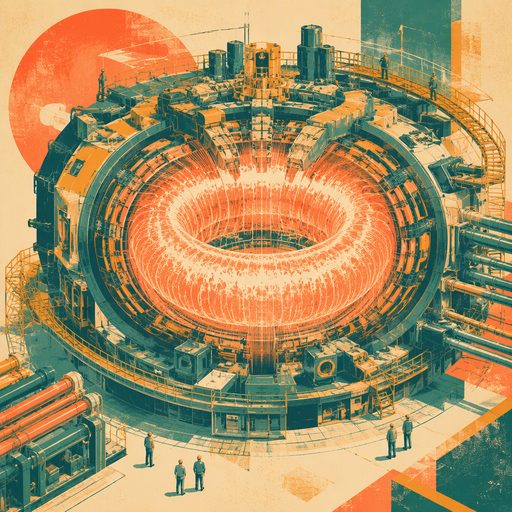
2030sTHE STAR IN A BOTTLE
Fusion power
the sun's trick, bottled
Net-energy fusion was proven in a lab in 2022. The 2030s bet is reactors that actually feed the grid. Always thirty years away, until suddenly it is not.
2040?THE GENERAL MIND
AGI
one system, every task
A machine that can learn anything a human can. Timelines range from this decade to never, argued by people who all agree it changes everything if it lands.
2030sTHE EXTRA DECADES
Longevity medicine
healthspan, not just lifespan
Senolytics, gene therapy, and AI-designed drugs aim to add healthy years, not just years. The first serious results are already in human trials.
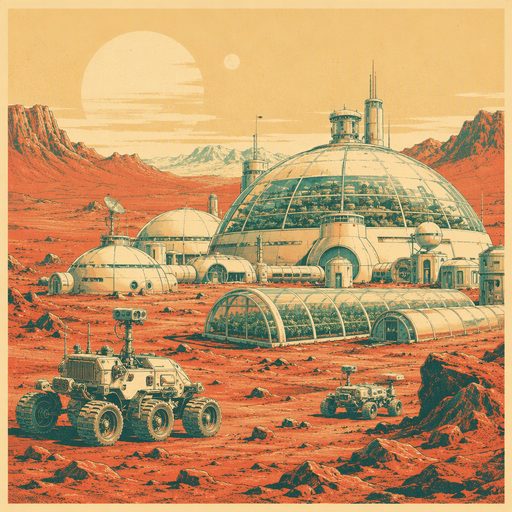
2040+THE SECOND ADDRESS
Mars settlement
a backup drive for civilization
Reusable rockets made the trip affordable-ish. What remains is the hard part: air, water, food, and laws, on a planet that hates you.
2030sTHE LAST KEYBOARD
Brain implants
thoughts in, actions out
Paralyzed patients already type with their minds. This decade is about restoring movement and speech; the next one raises the consumer questions.
2020sTHE REHEARSAL COPY
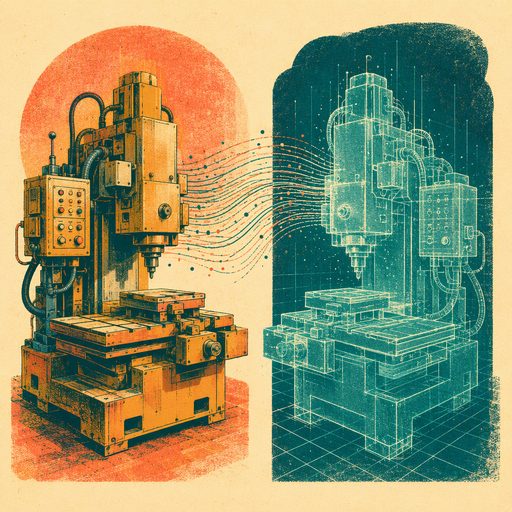
Digital twins
test it in the mirror first
Factories, cities, even hearts now run live virtual copies for rehearsal. The quietest technology on this wall, and already paying rent.
2020sTHE METAL WORKFORCE
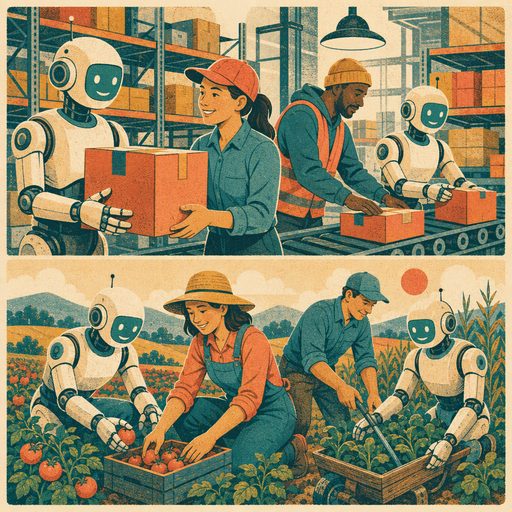
Robot labor
humanoids clock in
Warehouses run on robot swarms today, and humanoid pilots are working shifts at car plants now. The question moved from if to which jobs first.
2020sTHE PATIENT TEACHER
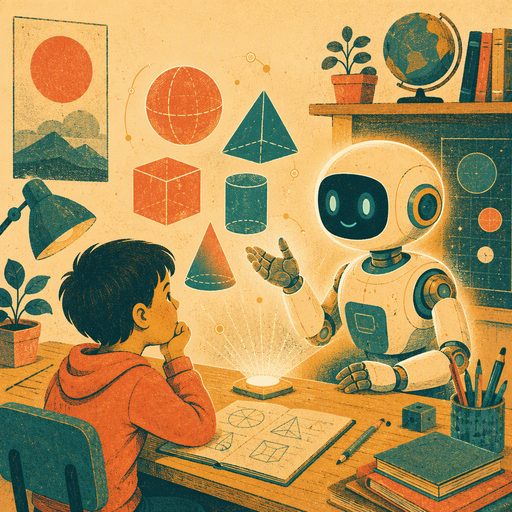
AI tutors
one teacher per child, finally
A tutor that never tires, never judges, and costs pennies was education's oldest dream. It is shipping now, and early classroom results are startling.
2030sLIFE, EDITED
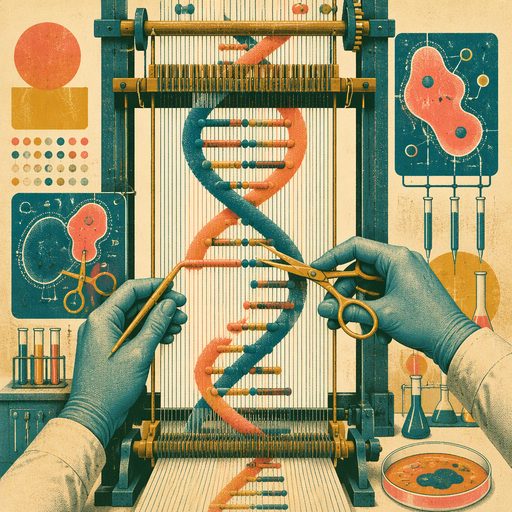
Programmable biology
code that writes cells
CRISPR cures are approved, AI designs proteins on demand, and gene circuits are becoming an engineering discipline. Biology is turning buildable.
2030sTHE OTHER COMPUTER
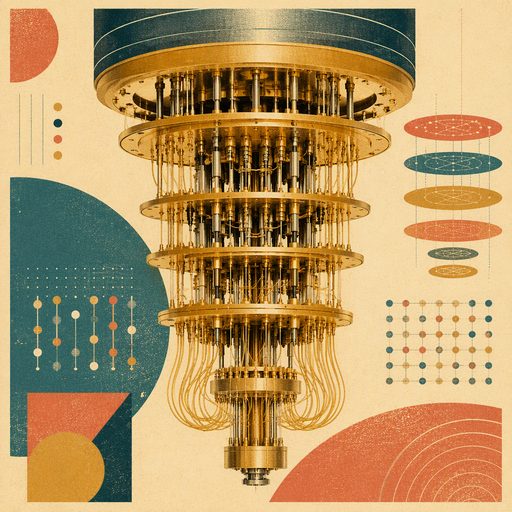
Quantum advantage
physics as a processor
Quantum machines solve specific problems no ordinary computer ever could. The first useful wins, in chemistry and materials, are the milestone to watch.
2040+THE ROCK ECONOMY
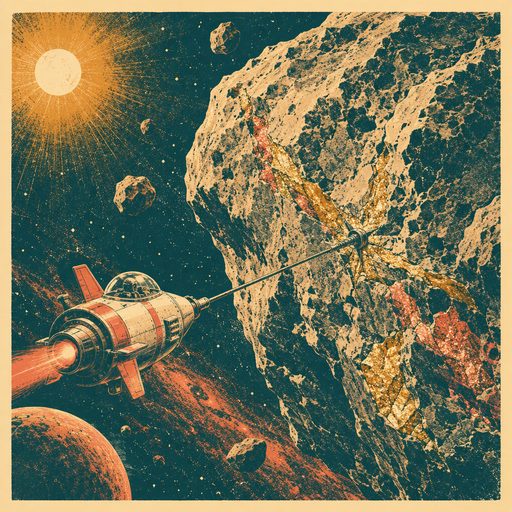
Asteroid mining
heavy industry, off planet
One metal-rich asteroid holds more platinum than Earth has ever mined. The economics are terrible today and fascinating on a twenty-year chart.
WILDCARDTHE NESTED WORLDS
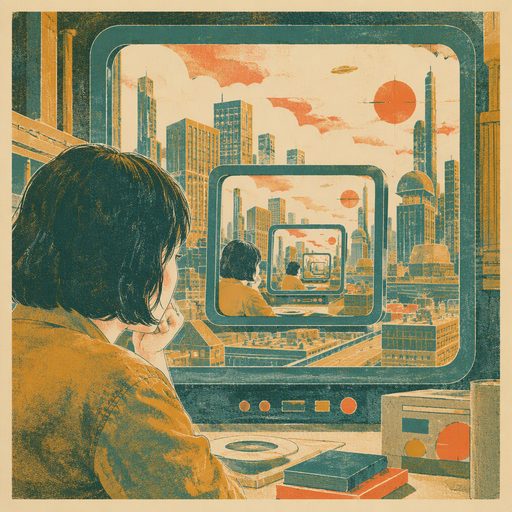
Simulated worlds
practice universes
AI now trains inside simulated cities, bodies, and economies before touching the real one. At the deep end sits philosophy's oldest question in new clothes.
Pick a horizon above and the matching futures will light up.
READ
SEC.08
The book list
Thirty books that built the conversation · open the featured one, then raid the shelf.
COVER
Fig. 6 · Eight pages per entry: cover, title page, a famous line, why it matters, its frontiers, the key ideas, and how to get hold of it.
Pick your next read
The sci-fi corner: they saw it coming
Long before the labs, the novelists ran the simulations. Six works of fiction that read like briefing documents now. Tap any card to open it in the flipbook above.
Fiction 1
Neuromancer
WILLIAM GIBSON · 1984
Cyberspace, named and mapped before the web existed. Half the vocabulary of the internet age comes from this one book.
Fiction 2
Snow Crash
NEAL STEPHENSON · 1992
The metaverse and the avatar, invented here in 1992. Tech founders keep accidentally re-founding this novel.
Fiction 3
Nineteen Eighty-Four
GEORGE ORWELL · 1949
The surveillance state, written as a warning and occasionally mistaken for a manual. The frame for every privacy debate since.
Fiction 4
Klara and the Sun
KAZUO ISHIGURO · 2021
A robot companion narrates, with total devotion and partial understanding. The most humane novel about machine minds ever written.
Fiction 5
I, Robot
ISAAC ASIMOV · 1950
The Three Laws, and nine stories about how rules for machines go wrong. The safety debate, started in 1940s pulp magazines.
Fiction 6
The Diamond Age
NEAL STEPHENSON · 1995
An interactive AI book raises a child. Every AI tutor pitch since is a footnote to the Primer.
VOICES
SEC.09
The voices: six feeds
Six shows that explain it all · pick two, subscribe, and let the field come to you.
DP
Dwarkesh Podcast
The deep dive
Long, prepared, unusually honest interviews with the people actually building frontier AI: lab founders, researchers, economists. The closest thing to sitting in the room.
Start with Any episode with a lab founder. Pick the most recent.
Four-hour conversations with scientists, founders, and the occasional head of state. Variable hit rate, but the big AI episodes are primary documents of the moment.
Start with The long interviews with Hinton, Sutskever, or Altman.
The New York Times tech show: two hosts translating the week's chaos into plain words, with jokes that land and reporting that holds up. The easiest habit on this list.
Start with This week's episode, whatever it is. That is the point.
Four-hour histories of how the tech giants actually got built: TSMC, NVIDIA, Microsoft, Amazon. Strategy as storytelling, researched like an audiobook degree.
Start with The NVIDIA trilogy. It explains the whole AI gold rush.
New research papers explained visually, fast, and with genuine wonder. The famous catchphrase: what a time to be alive. The best way to watch the science move in real time.
Start with Any video whose title makes you say wait, what?
The careers-and-impact show: AI risk, policy, and what an ordinary person can actually do about extraordinary technology. Serious, calm, and longer than most commutes.
Start with The episodes on AI safety careers, even if you never switch.